




Can a door canopy be used in areas prone to earthquakes?
 Jun 09, 2025|
 As a door canopy supplier, I often encounter inquiries from customers in various regions, and one question that frequently arises is whether a door canopy can be used in areas prone to earthquakes. This is a crucial concern, as safety is of utmost importance, especially in seismic - active zones. In this blog, I'll delve into the technical aspects, evaluate the feasibility, and provide some guidance for customers in earthquake - prone areas.
Understanding Earthquake Forces and Their Impact on Structures
Earthquakes generate complex forces that can cause significant stress on buildings and structures. The ground shaking during an earthquake can be divided into different components, including horizontal and vertical vibrations. Horizontal forces are typically the most challenging for structures, as they can cause lateral displacement and swaying. These forces can put a great deal of stress on the connections and structural integrity of a door canopy.
When an earthquake occurs, structures experience dynamic loads that are far greater than normal static loads. For a door canopy, this means that the materials and installation methods need to be able to withstand these increased forces without failing. If a door canopy is not properly designed and installed, it may pose a safety hazard during an earthquake, such as collapsing and causing damage to the building or endangering people nearby.
Material Selection for Earthquake - Prone Areas
The choice of materials is fundamental when it comes to ensuring the safety of a door canopy in earthquake - prone regions.
Metals
Door Canopy Metal is a popular option due to its strength and durability. Metals like steel and aluminum have high strength - to - weight ratios, which means they can resist the forces generated by an earthquake while keeping the overall weight of the canopy relatively low. Steel is known for its excellent ductility, which allows it to deform under stress without sudden failure. This property is crucial during an earthquake, as it enables the canopy to absorb some of the energy from the seismic waves.
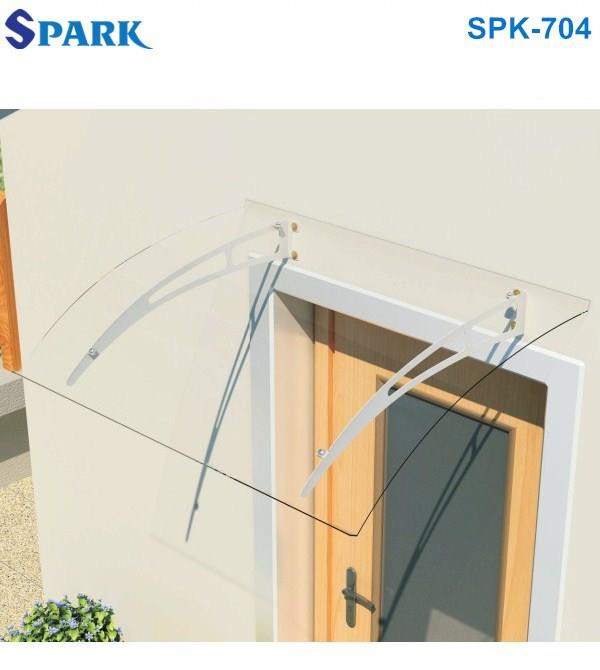
Aluminum, on the other hand, is lightweight and corrosion - resistant. It is also a good choice for areas with high humidity or near the coast. The Door Canopy Aluminium Brackets used in the installation of the canopy play a vital role. These brackets need to be designed to provide strong support and be able to withstand the lateral forces during an earthquake.
Glass
Glass Rain Canopy is another option, which offers a modern and elegant look. However, glass is a brittle material, and it can break easily under the impact of earthquake - induced vibrations. To use glass in an earthquake - prone area, special types of glass, such as laminated or tempered glass, should be selected. Laminated glass consists of multiple layers of glass bonded together with a plastic interlayer. In the event of breakage, the plastic layer holds the glass fragments together, reducing the risk of injury from flying shards. Tempered glass is also stronger than regular glass and breaks into small, relatively harmless pieces when shattered.
Design Considerations for Earthquake - Resistant Door Canopies
In addition to material selection, the design of the door canopy is also critical for earthquake resistance.
Structural Design
A well - designed door canopy should have a stable and balanced structure. The shape of the canopy can affect its response to earthquake forces. For example, a canopy with a triangular or arched shape may be more stable than a flat one, as these shapes can distribute the forces more evenly. The connections between different parts of the canopy, such as the brackets and the main frame, need to be strong and flexible enough to allow for some movement during an earthquake without failing.
Connection Design
The connections between the door canopy and the building are perhaps the most important aspect of the design. They need to be able to transfer the seismic forces from the canopy to the building's structure safely. Bolts, welds, and other fasteners should be properly sized and installed according to the engineering specifications. Regular inspections of these connections are also necessary to ensure their integrity over time.
Installation and Maintenance in Earthquake - Prone Areas
Proper installation is key to the performance of a door canopy in an earthquake - prone area. It should be carried out by experienced professionals who are familiar with seismic design requirements. The installation process should follow strict quality control measures to ensure that all components are installed correctly and securely.
Maintenance is also an ongoing task. Regular inspections should be conducted to check for any signs of damage, such as cracks in the glass, loose brackets, or corrosion of metal parts. Any issues found during the inspection should be addressed immediately to prevent further deterioration and ensure the safety of the canopy.
Conclusion
So, can a door canopy be used in areas prone to earthquakes? The answer is yes, but only if it is designed, constructed, and maintained with earthquake safety in mind. By carefully selecting appropriate materials, implementing proper design features, and ensuring correct installation and maintenance, a door canopy can provide both functionality and safety in seismic - active regions.

If you are located in an earthquake - prone area and are interested in purchasing a door canopy, I encourage you to contact us for a detailed consultation. Our team of experts can help you choose the most suitable materials and design for your specific needs, taking into account the local seismic conditions. We are committed to providing high - quality door canopies that meet the highest safety standards. Feel free to reach out to us to start the procurement discussion.
References
- Building Seismic Safety Council. (2015). NEHRP Recommended Seismic Provisions for New Buildings and Other Structures.
- International Code Council. (2018). International Building Code.
- ASTM International. (2019). Standard Specifications for Structural Steel for Buildings.