




What is the fatigue strength of steel door handles?
 Nov 26, 2025|
 Hey there! As a supplier of steel door handles, I often get asked about the fatigue strength of these products. It's a crucial aspect that can greatly impact the performance and longevity of door handles, so I'm here to break it down for you.
Let's start with the basics. Fatigue strength refers to the ability of a material to withstand repeated loading and unloading cycles without failing. In the context of steel door handles, this means how well the handle can endure the constant pulling, pushing, and turning forces it experiences over time.
Steel is a popular choice for door handles because of its excellent strength and durability. But not all steel is created equal when it comes to fatigue strength. The fatigue strength of steel door handles depends on several factors, including the type of steel used, the manufacturing process, and the design of the handle.
Types of Steel
There are different types of steel that can be used to make door handles, such as carbon steel, stainless steel, and alloy steel. Each type has its own unique properties that affect its fatigue strength.
Carbon steel is a common choice due to its affordability and good strength. However, it is more prone to rusting, which can weaken the handle over time and reduce its fatigue strength. On the other hand, stainless steel is highly resistant to corrosion, making it a great option for areas with high humidity or exposure to moisture. It also has good fatigue strength, especially when it contains a sufficient amount of chromium and nickel.
Alloy steel is another option that offers enhanced properties. By adding other elements like manganese, silicon, or vanadium, alloy steel can have improved strength, toughness, and fatigue resistance. This makes it suitable for heavy - duty applications where the door handle will be subjected to frequent and intense use.
Manufacturing Process
The way the steel door handle is manufactured also plays a significant role in its fatigue strength. For example, forging is a process where the steel is heated and shaped under high pressure. This method can improve the grain structure of the steel, making it more dense and uniform. A well - forged steel door handle is likely to have better fatigue resistance compared to one that is simply cast.
Heat treatment is another important step in the manufacturing process. Processes like quenching and tempering can alter the mechanical properties of the steel. Quenching involves rapidly cooling the heated steel to harden it, while tempering is used to relieve internal stresses and improve toughness. When done correctly, heat treatment can enhance the fatigue strength of the door handle.
Design of the Door Handle
The design of the door handle can influence its fatigue strength as well. Handles with smooth curves and rounded edges distribute the stress more evenly when force is applied. In contrast, sharp corners or edges can act as stress concentrators, where the stress is concentrated in a small area. Over time, these stress - concentrated areas are more likely to develop cracks, leading to premature failure.
The size and shape of the handle also matter. A thicker and more substantial handle can generally withstand more stress compared to a thin and flimsy one. Additionally, the way the handle is attached to the door can affect its fatigue performance. A secure and well - designed mounting mechanism ensures that the handle remains stable during use and reduces the risk of loosening or detachment.
Now, let's talk about how fatigue strength impacts the actual use of steel door handles. In residential settings, door handles are used multiple times a day. For example, the handles on the front door, bedroom doors, and kitchen cabinet doors are constantly being pulled and pushed. A handle with good fatigue strength will be able to handle this regular use without breaking or deforming.
In commercial or industrial environments, the demands on door handles are even higher. In a busy office building, the entrance doors may be opened and closed hundreds of times a day. In a factory, where heavy - duty doors are used, the handles need to withstand a lot of force. In these situations, a door handle with high fatigue strength is essential to ensure smooth operation and avoid costly replacements.

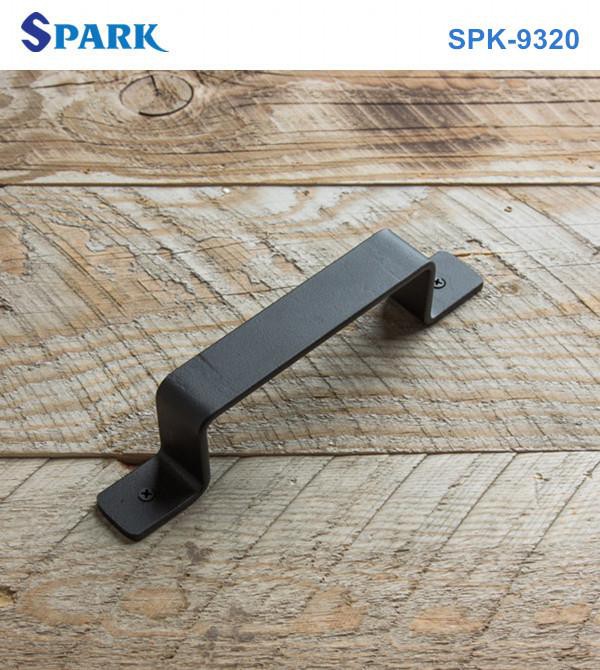
If you're in the market for steel door handles, we offer a wide range of options. Check out our Door Pull Handles, which are designed for easy gripping and smooth operation. Our Barn Door Handles are perfect for adding a rustic touch to your space while still providing reliable performance. And for those who love a more rustic look, our Rustic Barn Door Handles are a great choice.
We understand the importance of fatigue strength in our products. That's why we use high - quality steel, advanced manufacturing processes, and smart design principles to ensure that our door handles can stand the test of time. Whether you're a homeowner looking to upgrade your doors or a contractor working on a large - scale project, we have the right steel door handles for you.
If you're interested in learning more about our products or getting a quote, don't hesitate to reach out. We're here to help you find the perfect steel door handles that meet your needs in terms of both style and performance. Contact us today to start the conversation and let's work together to make your doors look and function their best.
References
- ASM Handbook, Volume 1: Properties and Selection: Irons, Steels, and High - Performance Alloys. ASM International.
- "Mechanical Behavior of Materials" by Donald R. Askeland and Pradeep P. Phule.